Saturday, May 20, 2023

Let's face it, AC units are not cool

More and more homeowners are turning to whole house air conditioning to beat the heat. But let's face it, as lovely as indoor cool air is, your air conditioning unit (the workhorse) isn't something you want front and center. Hiding them however can be tricky as you don't want to compromise their efficiency?

IMPORTANT CONSIDERATIONS

When considering how to hide your AC unit, keep in mind the manufacturer's requirements and restrictions - understanding how your air conditioner works and what keeps it efficient is key. If you skip this step, you risk reduced efficiency or even cause unintentional damage to the system itself.

Ensuring proper air flow should be your top priority. Your AC unit works hard to cool the inside of your home and needs to vent a lot of heat. Check the manufacturer’s recommended distances before installing any sort of enclosure or cover. You can also consult with an HVAC professional to ensure that hiding your AC does not cause damage to the system or limit access necessary for regular system repair and maintenance.

3 TIPS FOR HIDING YOUR AC UNIT

AC systems, while they provide much needed relief from the heat, can be an eye sore. No one wants to have their AC unit front and center in their garden - it doesn't add to a home's curb appeal and can detract from an otherwise stellar landscaping! The good news is that hiding your outdoor AC unit can be easy. There are many options! Consider one of these three:

1) DECORATIVE FENCE, BOX OR SCREEN There are a variety of decorative and creative ways of hiding your AC unit. For example, you could build a wall or fence in front of or around the unit to hide it. You may also consider building a trellis and growing vines such as clematis or roses around the unit. With any of these options, make sure your decorative solution does not block air flow or limit a technicians ability to access and service the unit.


Ready made screens

These are easy to find. Stores like Home Depot and Lowes offer lots of options. I even found some great screens on Amazon (of course, what don't they have?). Online shopping sites like Wayfair also offer some easy and attractive options. 

Build your own

Looking for an easy DIY project? Creating your own can be a simple weekend project due to the size and accessibility of the AC units. As an added bonus, you can design one that blends seamlessly with your homes aesthetic - modern, traditional, colonial, cottage, etc. 


2) HIDE WITH PLANTS A natural way to hide your AC unit is to use landscaping. The best thing about this is that you can be entirely creative. You can select colorful flowers or plants, planting them to block your view of the unit. Be sure to pick plants that are ever green - shedding leaves can lead to problems. If you need more frequent access, plant in portable planters. Whatever you plant, be sure to keep plants trimmed and make sure they are no closer than 2 to 3 feet from the unit to allow for access.


3) MOVE THE UNIT ENTIRELY This is perhaps the most expensive method of hiding your AC unit. To save on costs, it is best to move the unit when you are ready to replace the HVAC system. However, it is important to note that moving the equipment does not necessarily help you in hiding the AC unit. It simply means that you are able to take it to a place that you feel does not interfere with your landscaping and entertaining needs. There will be limitations on where your system can be placed, so make sure to consult a professional.

I hope these tips help.

Until next time,
la chasse au bonheur

Friday, May 12, 2023

the bees knees

More and more people are starting to dabble in a food-focused lifestyle of self-sufficiency — whether that’s growing their own veggies, raising chickens in a backyard coop, or for some, beekeeping.

While it's easy to wrap your head around growing vegetables and raising chicks, beekeeping can be a bit more mysterious. From essential beekeeping supplies to the perfect apiary location, here’s what any aspiring beekeeper needs to know.

The Colony

If you ever had the unfortunate experience of discovering a beehive, you probably learned that bees love living together in a colony. While colonies can have upwards of 60,000 bees, there is only one queen bee, with the rest being primarily female worker bees and some male drones.

The queen is larger and longer than the others and has a pointed abdomen. She is responsible for laying 1,500 eggs a day for two to five years in order to maintain a thriving colony. She also must stay strong and healthy or she’s at risk for being killed and replaced. A special pheromone lets the worker bees know whether she is alive and well or if she’s getting weaker.

Once they sense she’s getting weaker, they focus on feeding royal nectar to a small number of larvae until the first one hatches and becomes the new queen.

Gathering pollen, making wax, cleaning the hive and building honeycombs are just some of the other daily tasks worker bees are required to do. Tasks are “assigned” based on age with the younger bees doing duties within the hive and the older bees taking on the more dangerous jobs on the outside.

Drone bees make up a small percentage of a colony and only have one duty: to mate with the queen. Mating takes place mid-flight and the successful male immediately falls to his death (egads, a bit harsh).

Mind Your Own Beeswax

Beeswax is known as the miracle of the beehive. Without it, there’d be no beekeeping. Producing beeswax is quite an impressive process. Using special glands on their abdomens, worker bees secrete wax that is then formed into hexagon shapes which are used for all aspects of daily bee life, including storing honey. Another layer of wax goes over the combs with honey to lock in the moisture.

A hot knife is used to scrape the wax caps off the frames of honey. The caps then need to be separated from the honey before the wax is filtered or cleaned.

Beekeeping Equipment

Woodenware - this creates the beehive itself, including the hive bottom, body and top cover. Durable, well-built woodenware gives the bees a safe place to live and thrive.

Smoker - smoke prevents bees from sensing pheromones that signify danger, which helps to keep them calm.

Hive tool - a multipurpose tool used to open and inspect beehives.

Protective gear - hat/veil combination with ventilated jackets or full-body bee suits provide a protective barrier against stings.

Bees - a beehive requires bees, of course! Make sure you order enough for one to two colonies to start.


Location of the Hive

After compiling all your beekeeping equipment, it’s time to decide where to put it. While it’s important to be strategic with placement, remember that people today have thriving hives anywhere and everywhere. Still, there are a few things to keep in mind when placing hives.

Pick a spot where you will have easy access to the bees. If they are hard to get to, you might go there less frequently, and they won’t get the proper attention. The hive should get at least a half-day of sun. Additionally, if the sun hits the hive first thing in the morning, it will get the bees out and working.

Make sure there is a water source nearby. If there isn’t, you can always provide them with one. A pan filled with water and pebbles above the surface will suffice. Keep in mind: bees can’t swim, so the pebbles will help with the landing.

Try to avoid placing the hives near a neighbor’s yard. If you have a smaller outdoor space, you can mask the hive with hedges or bushes. That way your neighbors aren’t constantly reminded of your buzzing bees.

Hives and Colonies

A basic hive needs a few boxes for brood and a few boxes for honey. First-time hives require at least four boxes total to make it through the season. You can stack up the boxes to make the hive taller.

Once your hives are set up, you’re ready for the bees. You can order a bee package, which is a wooden frame with screen sides containing bees that aren’t related, or nucleus hives which is a mini beehive with a laying queen and bees that are related. Packages are less expensive, easier to find and allow you to learn the whole process, but a lot more work is involved. Nucleus hives on the other hand are well established and tend to be less stressful on the bees.

Now That You're a Beekeeper

Once your hive is up and running, your beekeeping responsibilities really begin. You will need to manage and care for these little buzzers. You’ll need to inspect the hive regularly to ensure the queen is alive and healthy. It’s also important to check whether the bees have enough space and resources to live.

Remember that bees need enough to get through the winter. As a beekeeper, you should only take what’s considered extra honey after the bees have prepared enough to survive the colder months.

Other Ways to Support Bees

You don’t need to be a beekeeper to do your part in helping bees thrive. Here are some other ways you can support them:

Plant more wildflowers - the easiest and prettiest way to help the bees is by creating pollinator habitats on your land. Even a small, square space filled with native wildflowers is enough to help a bee community. Talk to your local nursery about the best native flowers to plant.

Go organic - use organic products and natural solutions when treating your garden and yard. Insects like ladybugs and praying mantises can also help keep pests away.

Support your local beekeepers - visit a nearby farmers market or check your grocery store for local honey and beeswax products. You may even be able to purchase straight from the farm. Remember, supporting local is always the way to go!


Until next time, la chasse au bonheur

Tuesday, May 9, 2023

Springtime Curb Appeal

Whether you are getting your home ready for market (improving curb appeal has shown to increase not only your property's value, but also the property values of your entire neighborhood) or just itching to shake off the winter doldrums, these five tips will help you welcome spring and beautify your home.

1 Sidewalks and Driveways


This may be the first part of your property that your guests or prospective buyers step foot on, literally.

An affordable, virtually maintenance free option for sprucing up your paths is concrete stain. This do-it-yourself project can cost around $30 a gallon and requires very little prep work. Consider picking a color that is in the same color family as that of your home. A blue home could be happily complemented by a gray drive.

Another tip: fix cracks and uneven sections of your sidewalk and pathways. This project may require a bit more professional attention but will give buyers the right impression - that your entire home has been maintained.

2 Accent Door


It has been called the lipstick on the lady. It's inviting and it draws visitors, or buyers, in to your home. A plain door tends to recede into the background.

Consider a contrasting color to your home's exterior. On the color wheel, green is opposite red and yellow is opposite blue. Don't be afraid to be daring. Just a pint of paint can cover most doors and if you don't like the result you can try another color!

3 Trimming Trees


Before

Stand in front of your home and take a close and fresh look at your trees and bushes. Are there branches that have become overgrown and now obstruct the view of your home? You want your landscaping to complement your home, not hide it. Trees, shrubs, bushes should just frame paths and entries, not obstruct them.

After

To trim tree branches yourself you can buy a pole pruner or chain saw. Or you can hire a professional who has experience in shaping trees. Keep in mind, however, that spring is NOT the time to prune flowering trees or maples. These types of trees should be pruned in late Summer or early Fall.

4 Early Spring Planting


The last frost date varies by area. It also varies from year to year. If you feel that your home will not see another frost then you may be safe to plant a few hardy annuals to add some pop of color to your yard. Even if a frost catches you by surprise, you can cover the plants for the evening to save them from the cold.

Some plants that can give you an early burst of color:
     Pansies - these bolts of color can even survive Winter
     Calendula - these "pot marigolds" are a versatile plant
     Violets - heart shaped petals create vibrant color spots
     Other options - cornflower, foxglove, larkspur, sweet alyssum, dianthus

Cleaning out your garden beds also adds an element of neatness that conveys the right message!

5 Outdoor Lighting


Low voltage (12 volt) and solar lighting are good options for improving curb appeal. There are hundreds of designs of solar lights. These small fixtures generally sit on stakes in the ground and can be used to accent paths or gardens and are a great do-it-yourself option.

Also, consider using uplighting on trees to create night-time focal points. This is a great way to showcase your home for those driving by after work.

I better get busy!

Until next time,

la chasse au bonheur

Sunday, April 30, 2023

The thrills of minor league baseball


Looking for some summer fun? Pack the family in the car and head to the nearest minor league stadium on game night and be prepared for all the thrills of Major League Baseball at a fraction of the cost, plus an extra heap of family fun!

LET THE FAMILY FUN BEGIN
Minor league baseball games not only offer the opportunity to watch some good baseball but are also structured around fun for the whole family, with yummy local food and kid-friendly entertainment. Not to mention, obtaining an autograph is much easier.

WANT TICKETS?
Most local teams have websites for purchasing tickets online, or ticket hotlines. Another place to start the search: milb.com/tickets. This site consolidates all minor league teams, showing team videos, scores, schedules, history, contests and how to buy tickets. Families on a road trip can use the site to find teams in the cities along their vacation route.


HOW THE MINOR LEAGUE DIFFERS FROM THE MAJOR LEAGUE
Minor League Baseball is the farm system for Major League Baseball. Great young players hone their talents in the minors before being called up to the majors. Sometimes major leaguers are sent down to play in the minors for rehab from an injury or to fix their swing.

The game, itself, is exactly the same as what the Big Boys play. Same ball, same bats, same rules. The great difference is that Minor League Baseball can be more accessible than a major league game.

You see up-and-coming talent, up close, in smaller stadiums with cheaper seats, in smaller cities and towns across America. Plus, the fun quotient is amped up: silly mascots, kids contests and a more informal atmosphere.

Minor league players take the game seriously, but the atmosphere is more friendly. The emphasis is on introducing kids to the love of the game.


MORE TEAMS, MORE ACCESS, CHEAPER TICKETS
While Major League Baseball has 30 teams in two leagues, Minor League Baseball has 246 teams in 20 leagues. This vast spiderweb of feeder teams funnel talent up to the majors, and sometimes back down from the majors. Attendance at minor league games averages 2,000 to 4,000 a game compared to an average attendance of 28,000 at a major league stadium.

Low ticket prices at the minors make family attendance possible. The average ticket price for an adult is $8 at 80% of the minor league ballparks. An average cost for a family with food is $68 for a Triple-A-game.


WATCH FAMOUS MINOR LEAGUERS
To track the top minor league prospects and find out which ones might be playing in the minor league game you plan to watch, go to www.fangraphs.com. The site is loaded with data on the players and teams.
Minor league teams are full of talent. A player you follow in the minors often is just a major league injury away from being called up into the majors. Every major league player, from Mike Trout with the Angels to Mookie Betts with the Dodgers, began their career in the minor leagues.


HERE’S A SAMPLING OF WHAT YOU’LL FIND WHILE WATCHING SOME TEAMS ACROSS AMERICA

TACOMA RAINIERS
STADIUM ATTRACTIONS:
A parachuting reindeer, named Rhubarb, arrives during pregame

BEST FOOD:
Grounder’s garlic fries

EVERETT AQUASOX
STADIUM ATTRACTIONS:
Theme nights all season long

BEST FOOD:
Dippin' Dots in a mini AquaSox baseball hat

SACRAMENTO RIVER CATS
STADIUM ATTRACTIONS:
Kid’s wiffleball field

BEST FOOD:
A gourmet burger and famous orange freeze

LOUISVILLE BATS
STADIUM ATTRACTIONS:
Jake the Diamond Dog, who does tricks for the kids before game time

BEST FOOD:
An onsite brewery and a fried bologna sandwich

OMAHA STORM CHASERS
STADIUM ATTRACTIONS:
Mini-golf down the right-field line; free basketball court for kids; free photo booth

BEST FOOD:
The Omaha Steaks Corn-Dog-O, which is two hot dogs, pulled pork and coleslaw wrapped in a tortilla. (Heartburn?)


Now, let's play ball!

Tuesday, April 25, 2023

Mint Julep, anyone?

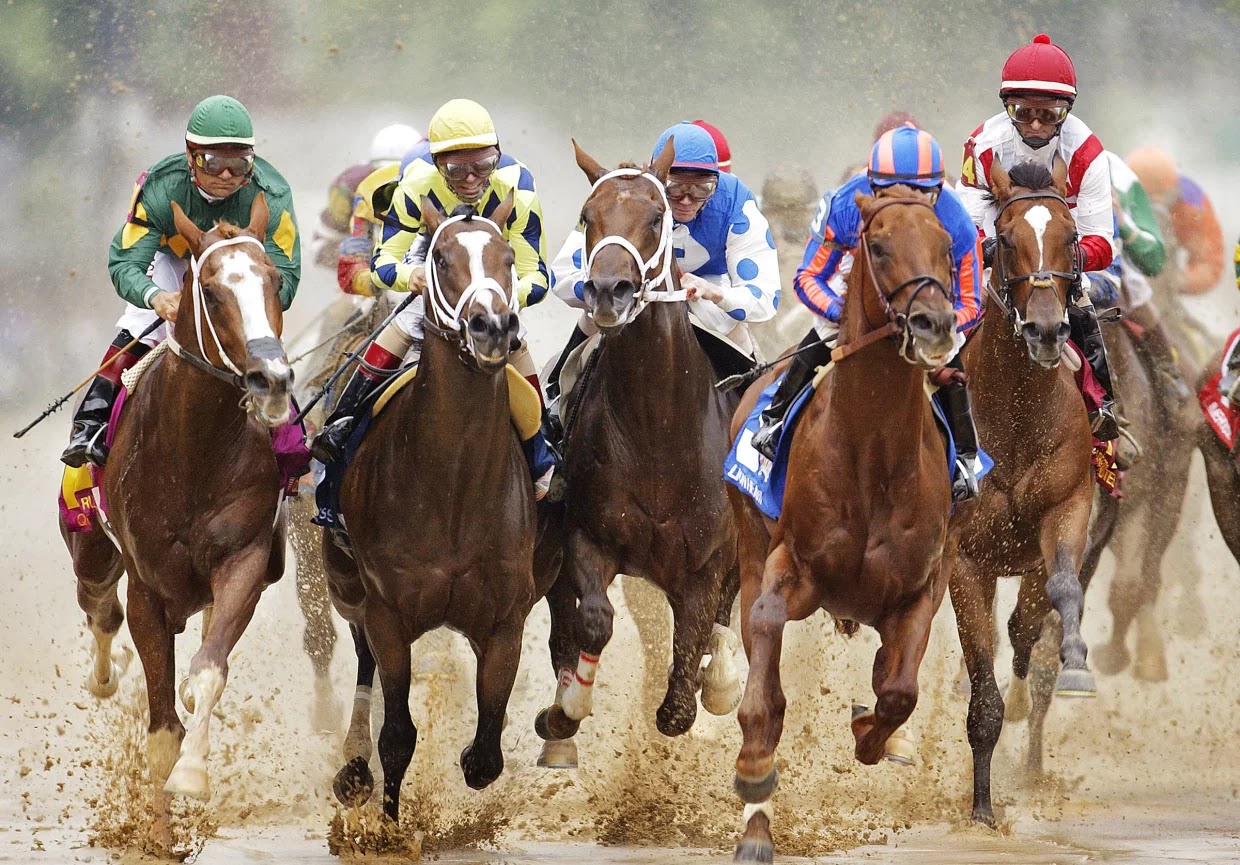
Photo Credit: Bill Frakes | Sports Illustrated

Known as the most exciting two minutes in sports, the Kentucky Derby is the perfect excuse for me to host a day of festivities and fun. The race is almost always held on the first Saturday in May, so I find there’s plenty of time to plan the perfect party. 

- Invitations -

I like to start with the invitation as it sets the tone for the event as well as relays important information such as when and where, any special attire (hats anyone?) and preps guests for (fun) wagering games (don't forget your twenty)!


- The Hat -

A Derby party wouldn't be complete without guests showing up in their best (prettiest, quirkiest) hats. There aren’t any rules to follow when choosing a hat — from simple and classic to extravagant and bold, it’s all about having fun! While the spotlight is often on women’s hats, I encourage men to join in on this tradition too with fedoras or a bowler hat. 

- The Outfit -

Second to the hat is the outfit. I love to encourage Derby Attire - (bright, fun spring colors is just what we need this time of year). Trainer Tip - be sure your outfit doesn’t steal the spotlight - the hat must be the star!


- Entertainment -

What’s a horse race without some wagers on the line? Here are two wagering games to try:

• Lucky Long shots: Bet which horse will come in last.

• Blind Draw: Write the name of each horse in the race on a piece of paper. Set a price for guests to pay to draw a name. The person with the winning horse wins the jackpot!

Don’t forget to have a best-dressed contest for guests to vote on their favorite ensemble!

- Food -

My Derby Parties (I suspect in Kentucky as well) are largely social events - they consist of drinks, fun, and conversation. As such, I like to prepare a buffet style spread for guests to enjoy throughout the day. It also makes serving easier, which is great for me!

Foods that can be served as individual portions are perfect. The menu may include pulled pork sliders, deviled eggs, chicken salad sandwiches, pimento cheese dip and spicy watermelon cubes. Gourmet popcorn like caramel bourbon or cheddar cheese and spicy pecans are easy snacks.

I love finishing with my famous (in my world) Pecan Pie Tartlets made with Kentucky Bourbon.


- Drinks -

It wouldn’t be a Kentucky Derby Party without Mint Juleps. I've also served the Jockey Club, similar to a Manhattan, the two-ingredient Horse’s Neck (bourbon and ginger ale) and the Man o’ War, named for one of the greatest racehorses of all time. A pitcher of sweet tea is a must!

- Decor -

I like to keep my decor simple. Since the big race is often referred to as “The Run for the Roses”, I like to use roses as my main visual. I place individual roses in derby glasses (I find roses pair nicely with silver) and tuck them throughout the house with a larger arrangement of roses for the main centerpiece.

If you did want to add a few more details to your decor try integrating anything horsey - horse statue(s), horseshoes, blue ribbons, jockey silks and perhaps astroturf running down the table for the win! 


- Everyone's in the Winner's Circle -

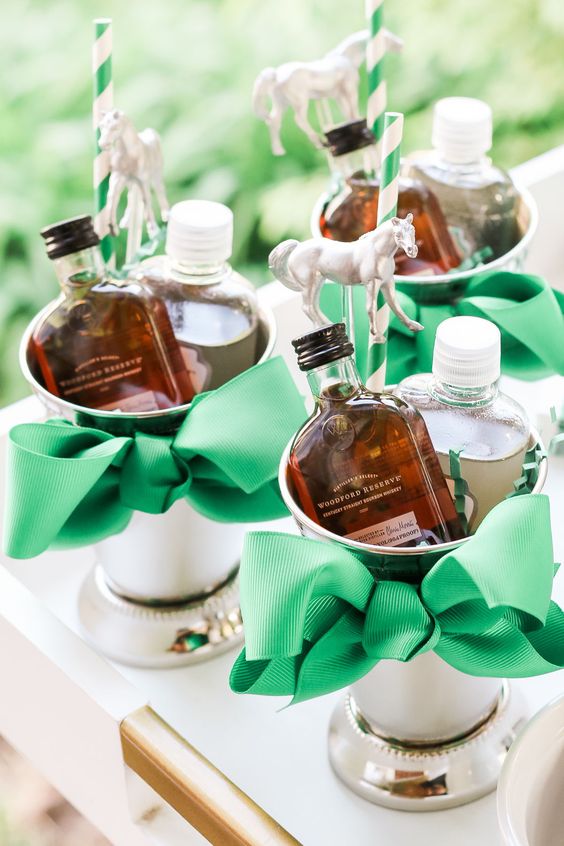
I love sending my guests home with a token from the day - a memento to remind them of the fun times we shared and to show them just how much they mean to me. We all have busy schedules, so I want them to know how much I appreciate them taking the time to attend. Of course, a hug works just as well!


All that's left now is to turn on the TV and we are off to the races!


1977 Derby Winner - Seattle Slew
Photo Credit Neil Leifer |Sports Illustrated